

Let’s be honest: automatic cat feeders are a game-changer. They mean no more 5:00 AM "feed me" wake-up calls from a hungry kitty and no more rushing home through traffic just to make sure Mittens gets her dinner on time.
But as convenient as they are, these high-tech gadgets aren’t exactly "set it and forget it" forever. Whether you’re using a sleek Iseebiz 3L Automatic Pet Feeder or a 2-in-1 Gravity Feeder, there are common pitfalls that can lead to a hungry, frustrated cat or a broken machine.
Are you making these mistakes? Let’s dive into how to fix them so you can keep your feline friend happy and your mornings peaceful.
1. Using the Wrong Kibble Size
It’s tempting to grab whatever bag of cat food is on sale, but your feeder has a "type." Most automatic feeders are designed for specific kibble shapes and sizes: usually small, round pellets.
The Mistake: Using large, star-shaped, or irregular kibble that gets stuck in the dispensing mechanism. This can cause the motor to jam, leaving your cat with an empty bowl while the machine makes a stressed-out whirring sound.
The Fix: Always check your feeder’s manual for the recommended kibble size. If you’re switching brands, do a manual test dispense to ensure the new food flows through the Automatic Pet Feeder smoothly. Stick to kibble that is ¼ inch (approx. 6mm) or smaller unless your feeder specifically says it can handle larger bits.
2. Skipping the "Test Run" Period
You just got your new feeder, programmed it for three meals a day, and immediately headed out for a weekend getaway.
The Mistake: Trusting the technology before it has proven itself. We’ve seen it all: the clock was set to AM instead of PM, the portion size was way too small, or the cat was too scared of the "robot" to even go near it.
The Fix: Give yourself at least a week of "supervised feeding" with a new device. Watch it dispense a few cycles to confirm the schedule is correct. This also gives your cat time to get used to the sound of the kibble hitting the bowl.
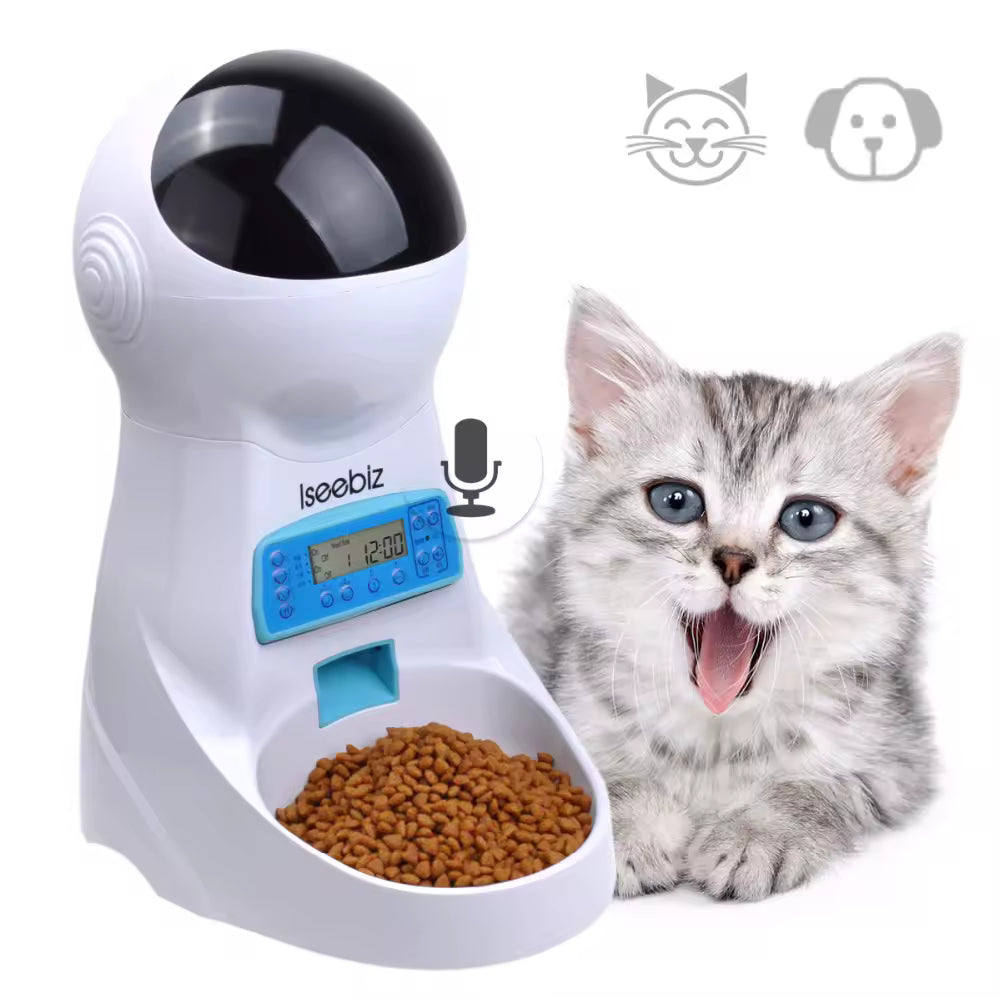
The Iseebiz 3L Feeder features an LCD panel that makes scheduling easy: just be sure to double-check those AM/PM settings!
3. Relying on a Single Power Source
Many modern feeders plug into the wall, which is great: until the power goes out.
The Mistake: Not installing backup batteries. If you have a brief power flicker or a full-blown outage, your feeder’s internal clock might reset, or it might stop working entirely.
The Fix: Most high-quality feeders, like our Smart Auto Feeder options, come with a battery backup compartment. Always install fresh alkaline batteries even if you keep the unit plugged in. It’s the cheapest "insurance policy" you can buy to ensure your cat never misses a meal.
4. The "Set It and Forget It" Cleaning Trap
Because the food is tucked away in a hopper, it’s easy to forget that the feeder needs a good scrub.
The Mistake: Letting kibble dust, oils, and crumbs build up inside the hopper and the dispensing chute. Over time, these oils can turn rancid or attract mold and bacteria, which isn't just gross: it can make your cat sick.
The Fix: Wash the food bowl and the hopper regularly. We recommend a full cleaning at least once every two weeks. If you’re using a 2-in-1 Automatic Cat Feeder & Water Dispenser, pay extra attention to the water side to prevent biofilm (that slimy pink stuff) from forming.
5. Miscalculating Portion Sizes
"Portion 1" on a feeder rarely equals one cup of food. Every brand uses different units.
The Mistake: Assuming the factory settings match your cat’s dietary needs. Some feeders dispense by volume, some by weight, and some by the "number of seconds the motor runs." If you don't calibrate, you could be accidentally putting your cat on a crash diet or helping them pack on the pounds.
The Fix: Grab a measuring cup and run a test portion. See exactly how much comes out for "1 unit." Adjust the programming until it matches the daily calorie count recommended by your vet. If your cat eats too fast once the food hits the bowl, consider using a Slow Food Cushion to spread the kibble out and prevent "scarf and barf."

Is your cat a "feeder hacker"? Some cats are surprisingly good at prying open lids.
6. Bad Placement: The Wi-Fi and Stress Factor
Where you put the feeder matters just as much as what's inside it.
The Mistake: Placing a smart feeder in a Wi-Fi "dead zone" or putting it in a high-traffic, noisy area. If the Wi-Fi drops, you might lose the ability to change the schedule via your app. If the area is too loud, an anxious cat might be too scared to eat when the machine starts whirring.
The Fix:
- Check the Signal: If you're using a Wi-Fi-enabled feeder, make sure it has at least two bars of signal.
- Quiet Corner: Place the feeder in a calm, low-traffic area.
- Stability: Use a non-slip mat under the feeder. Cats hate it when their bowl slides around while they're trying to eat.
7. Underestimating the "Feeder Hacker"
Some cats view an automatic feeder as a puzzle box that must be solved.
The Mistake: Buying a feeder with a flimsy lid. Some clever kitties learn that if they tip the feeder over or stick a paw up the dispensing chute, they can get "bonus" snacks.
The Fix: Look for feeders with secure, locking lids and a design that hides the dispensing chute. Our ROJECO 2-in-1 Feeder is built to be sturdy, making it much harder for "hefty" hackers to tip over. If your cat is a persistent thief, you might need to secure the feeder to a heavy base or a wall.
Conclusion: Better Feeding, Happier Cats
An automatic feeder is one of the best investments you can make for your pet's routine. It ensures consistency, which cats love, and gives you a bit of your freedom back. By avoiding these seven common mistakes, you’ll ensure your tech works for you: not against you.
Ready to upgrade your cat's dining experience? Browse our full collection of Feeding Bowls and Automatic Dispensers at Chew Crew Pet today!
Want more tips? Check out our guide on Interactive Cat Toys to keep your kitty active between mealtimes!