

So, you finally did it. You traded that old, beige carpet-covered eyesore for a sleek, modern cat tree that actually matches your living room aesthetic. Your cat should be doing backflips of joy, right? But instead, they’re staring at it like it’s a giant, confusing piece of modern art: or worse, they’re ignoring it entirely in favor of your favorite velvet armchair.
As pet parents, we want the best for our furry roommates. We want them to have a vertical kingdom where they can scratch, climb, and survey their domain. But even the most beautiful, high-end cat tower can fail if it isn't used correctly.
If your cat is turning up their nose at their new furniture, don’t worry. You probably haven’t bought a "broken" cat. You might just be making one of these seven common mistakes. Here is how to fix them and turn that cat tree into the most popular spot in the house.
1. Living with "The Wobble"
Nothing ruins a cat's confidence faster than a wobbly foundation. Imagine trying to climb a ladder that shakes every time you step on it: you’d probably stay on the ground, too!
Many modern cat trees prioritize height and sleekness, but if the base isn't heavy enough or the joints aren't tight, the whole structure will sway when your cat launches themselves onto the top perch. This is especially true for larger breeds like Maine Coons or Ragdolls who bring some serious "thump" to their jumps.
The Fix: Stability is non-negotiable. When you first assemble your tree, give it a firm "shake test." If it wobbles, check if the base is level. For extra-tall trees, consider using a furniture anchor to secure it to the wall. At Chew Crew Pet, we recommend our 184cm Large Cat Tree, which is designed with a wide, reinforced base to handle even the most energetic climbers.
2. Tucking It Away in a Spare Room
We get it: even a "chic" cat tree takes up space. It’s tempting to put the cat tower in the guest bedroom or a quiet corner of the basement where it’s "out of the way." However, cats are social creatures. They want to be where the action is!
In the wild, high vantage points serve two purposes: hunting and safety. In your home, a cat tree in a high-traffic area (like the living room) allows your cat to feel like part of the family while still having a safe "out" if things get too loud.
The Fix: Move the tree to a central location where you spend most of your time. If you’re worried about it looking out of place, look for designs that complement your decor. A well-placed tree near a window is the ultimate "Cat TV" experience.

3. Ignoring the "Set It and Forget It" Maintenance
Your modern cat tree isn't a "one and done" installation. Cats are surprisingly hard on their furniture. Between the daily climbing, the vigorous scratching, and the occasional zoomies-induced leap, the bolts that hold the tower together will naturally loosen over time.
A loose bolt leads to a squeaky tree, and a squeaky tree leads to a nervous cat. Plus, frayed sisal rope or loose fabric can become a safety hazard if a claw gets snagged.
The Fix: Set a reminder on your phone for a "Monthly Tree Tune-Up." It only takes five minutes! Grab your tools and tighten every screw. Check the scratching posts for wear and tear. If your cat is a heavy scratcher, you might need to re-wrap or replace specific posts once a year to keep them enticing.

4. Forgetting About the Golden Years (Age Appropriateness)
A six-foot-tall tower with huge gaps between levels is a dream for a one-year-old kitten. But for a senior cat with a little bit of arthritis or a cat that’s carrying a few extra pounds, those jumps can be daunting or even painful.
Many modern designs are quite vertical, which is great for saving floor space, but if the "steps" are too far apart, your older cat will eventually stop trying to reach the top.
The Fix: Look for a tree with staggered levels or "staircase" designs that allow your cat to hop up in small increments. If your current tree is a bit too "extreme," you can place a sturdy ottoman or a smaller cat scratcher nearby to act as a stepping stone.
5. The "No-Scratch" Material Mismatch
One of the biggest reasons cats ignore their trees is because they don't like the texture. Some modern trees use very soft, plush fabric everywhere: including the posts. While it looks cozy, cats need something with "grit" to shed their claw sheaths.
If the tree only offers soft carpet or fuzzy fabric, your cat will head straight back to your expensive sofa because it provides a better scratching experience.
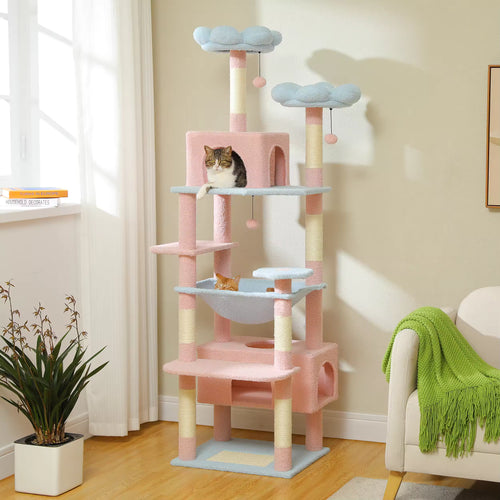
The Fix: Ensure your tree has a variety of textures. Look for high-quality sisal rope or seagrass wrapped around the main support pillars. The 184cm Large Cat Tree features multiple sisal scratching posts precisely for this reason: it satisfies that natural urge to scratch while protecting your other furniture.
6. Dangerous Placement (Heat and Fans)
This is a mistake we see far too often. In an effort to keep their cat warm, many owners place the cat tree right next to a radiator or a space heater. While cats love heat, prolonged exposure to high temperatures can dry out their skin or, in extreme cases, lead to burns or fire hazards.
Similarly, placing a tall tower directly under a ceiling fan is a recipe for a very bad day if your cat decides to leap toward a moving blade.
The Fix: Keep the tower at least three feet away from any heat source. Make sure it isn't positioned in a way that allows your cat to leap onto dangerous "forbidden" zones like the top of a stove or into a ceiling fan's path. Safety first, luxury second!
7. The "Forceful Introduction"
The tree arrives. You’re excited. You pick up your cat and plop them onto the highest perch to show them how great it is. What does the cat do? They immediately scramble down and hide under the bed for three hours.
Cats are "neophobic," meaning they are often suspicious of new things in their environment. By forcing them onto the tree, you’ve just associated that new piece of furniture with a feeling of being trapped or startled.
The Fix: Let them discover it on their own terms. You can "bait" the tree by placing a few high-value treats on the lower levels. Rub a little catnip on the scratching posts or leave a toy they love in the hammock. If they see the tree as a source of snacks and play, they’ll be claiming it as their own in no time.
Bonus Tip: Creating a Full "Pet Tech" Ecosystem
A happy cat isn't just about the furniture: it's about the routine. If you want your cat to feel truly at home in their new space, consider pairing their tree with other stress-reducing tools. For example, placing a 2-in-1 Automatic Cat Feeder & Water Dispenser within eyesight of their tower can help create a "safe zone" for both eating and resting.
When your cat knows exactly where their resources are and that their "throne" is stable and safe, you’ll see a massive improvement in their overall confidence and happiness.
Final Thoughts
A modern cat tree is more than just a piece of decor: it's an investment in your pet's physical and mental health. By avoiding these seven common mistakes, you’re not just fixing a furniture problem; you’re providing your cat with the security and enrichment they need to thrive.
So, go ahead: tighten those bolts, move that tree to the sunny window, and maybe sprinkle a little catnip on that top perch. Your cat (and your couch) will thank you!
Want more tips for your furry friends? Check out our latest guides on dog crate training or learn how to choose the right disposable pet diapers for your senior pets.