

Let’s be honest: automatic cat feeders are a lifesaver. Whether you're stuck in traffic, working late, or just want to sleep past 5:00 AM without a paw to the face, these gadgets have revolutionized how we care for our feline friends.
But here’s the catch. While we think we’re being "super-parents" by automating our cats' dining experience, many of us are accidentally contributing to one of the biggest health crises in the pet world: obesity.
Did you know that over 50% of cats in the U.S. are overweight? It’s not just a matter of "more to love": obesity leads to diabetes, joint pain, and a shorter life for our kitties. Often, the very tool meant to help us manage their diet: the automatic feeder: is being used in ways that actually make them gain weight.
Are you making these common mistakes? Let’s dive into how to fix them and the "one simple trick" that can keep your cat trim, healthy, and happy.
Mistake #1: The "Set It and Forget It" Mentality
We get it. The point of an automatic feeder like our Iseebiz 3L Automatic Pet Feeder is to take the chore off your plate. But "automated" shouldn't mean "ignored."
Many pet parents program the feeder and then stop checking it. This leads to a few problems:
- The "Jam" Disaster: Kibble can get stuck. If you aren't checking the bowl daily, your cat might miss several meals before you notice.
- The "Empty Hopper" Surprise: It sounds obvious, but many of us forget to refill the reservoir until the cat is screaming at the empty machine.
- The "Double Dispense": Sometimes, a glitch or a power flicker can cause a machine to dispense twice, or not at all.
The Fix: Make it a habit to check the feeder’s bowl and the hopper every single evening. It takes five seconds but ensures your cat is getting exactly what they need.
Mistake #2: Not Decoding "Portion Units"
This is arguably the #1 reason cats gain weight on automatic feeders. Most machines don't measure in "cups" or "grams." Instead, they use "portions" or "segments."
For example, on the Iseebiz 3L Feeder, you might set it to dispense "2 portions" for breakfast. But how much is a "portion"? Depending on the size and shape of your kibble, one portion might be 5 grams or 15 grams. If you guess wrong, you could be accidentally feeding your cat double the calories they need.
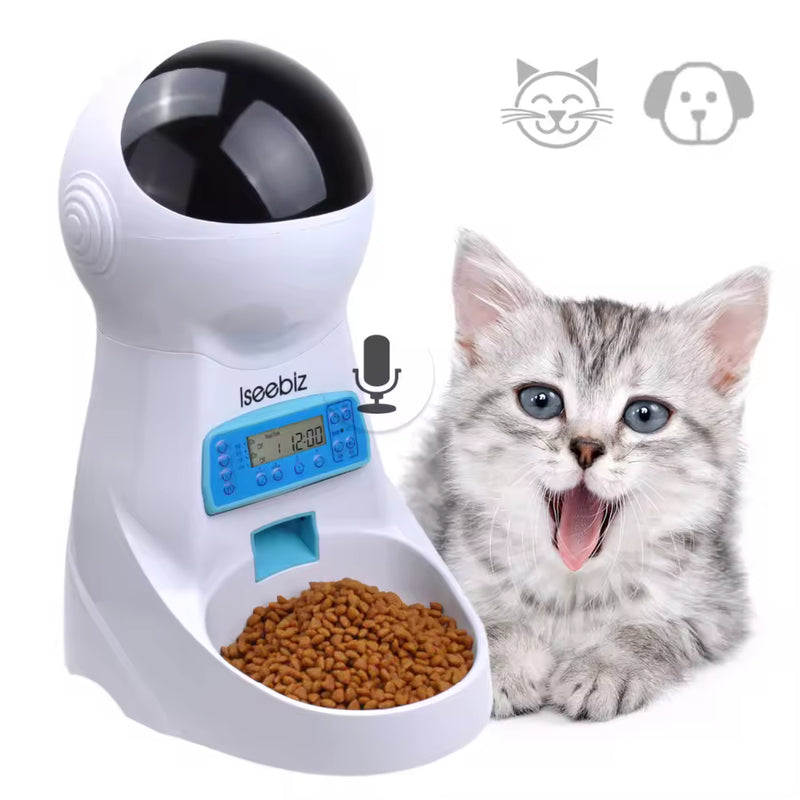
The Fix: Before you start your schedule, place a measuring cup or a kitchen scale under the dispenser. Hit the "manual feed" button for one portion and see exactly how much comes out. Then, calculate how many portions equal your cat’s daily requirement.
Mistake #3: Treating the Hopper Like an All-You-Can-Eat Buffet
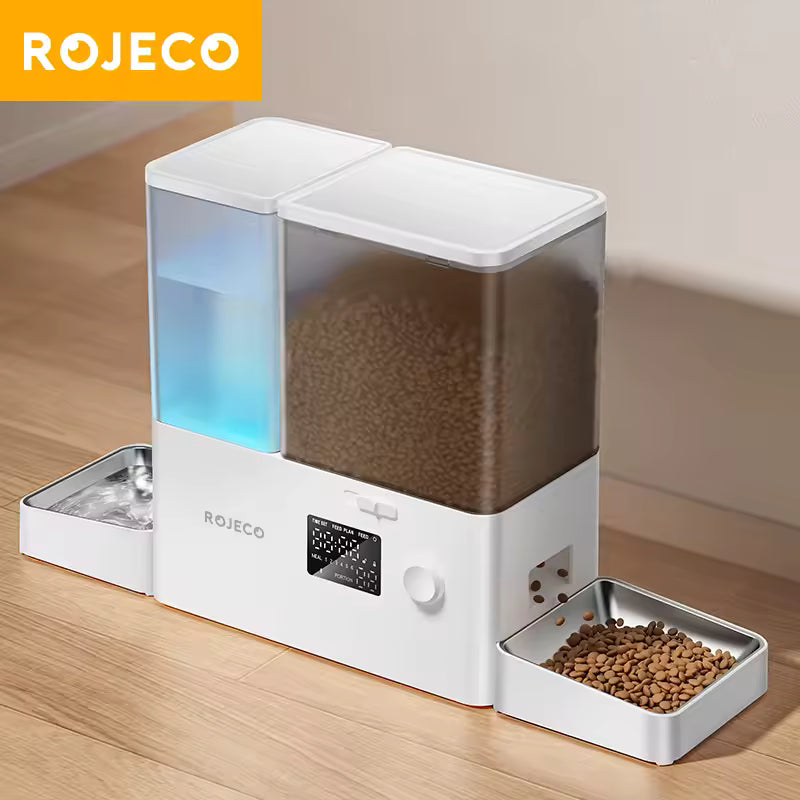
Some owners use gravity-fed feeders, like our ROJECO 2-in-1 Auto Cat Feeder & Water Fountain, and keep the food side constantly full. While gravity feeders are great for hydration (cats need fresh water!), they can be dangerous for food-motivated cats.
If your cat is a "grazer" who stops when they’re full, you’re lucky. But most cats will eat as long as food is in the bowl. This is called "free-feeding," and it’s the fastest route to a chubby kitty.
The Fix: If you have a cat that tends to overeat, avoid gravity-based food dispensers. Stick to a timed electronic feeder that dispenses specific amounts at specific times. If you love the 2-in-1 look, use the water side for hydration and the food side only for a very specific, measured amount each day.
Mistake #4: The Multi-Pet "Food Thief"
In a house with two cats (or a cat and a dog), automatic feeders can create a "Buffet Bully." One cat might finish their portion and then shove the other cat aside to eat theirs too. You end up with one very round cat and one very hungry cat.
The Fix: If you have a multi-pet household, consider placing feeders in different rooms. Alternatively, look for feeders that are triggered by a pet’s specific microchip so the lid only opens for the right cat. At the very least, supervise a few feedings to see who is the "food thief."
The Simple Trick to Prevent Pet Obesity: "Micro-Meals"
Ready for the secret? It’s not about feeding less food (though portion control is key), it’s about feeding more often.
In the wild, cats are hunters. They don't eat two big "square meals" a day. They eat 5 to 10 tiny meals (like mice or birds) throughout the day and night. When we give a cat two big bowls of food, their blood sugar spikes and then crashes, making them feel starving and lethargic.
The Simple Trick: Use your automatic feeder to program 4 to 6 tiny meals per day instead of 2 large ones.
This keeps their metabolism active, prevents the "starving cat" begging behavior, and mimics their natural biological rhythm. Most modern feeders, like our Auto Feeder Set, allow you to schedule multiple feedings. By splitting their daily calorie count into 5 small servings, your cat stays fuller longer and is less likely to store those calories as fat.

Don't Forget the Exercise!
Diet is 80% of the battle, but exercise is the remaining 20%. An indoor cat who only walks from the bed to the feeder isn't burning many calories.
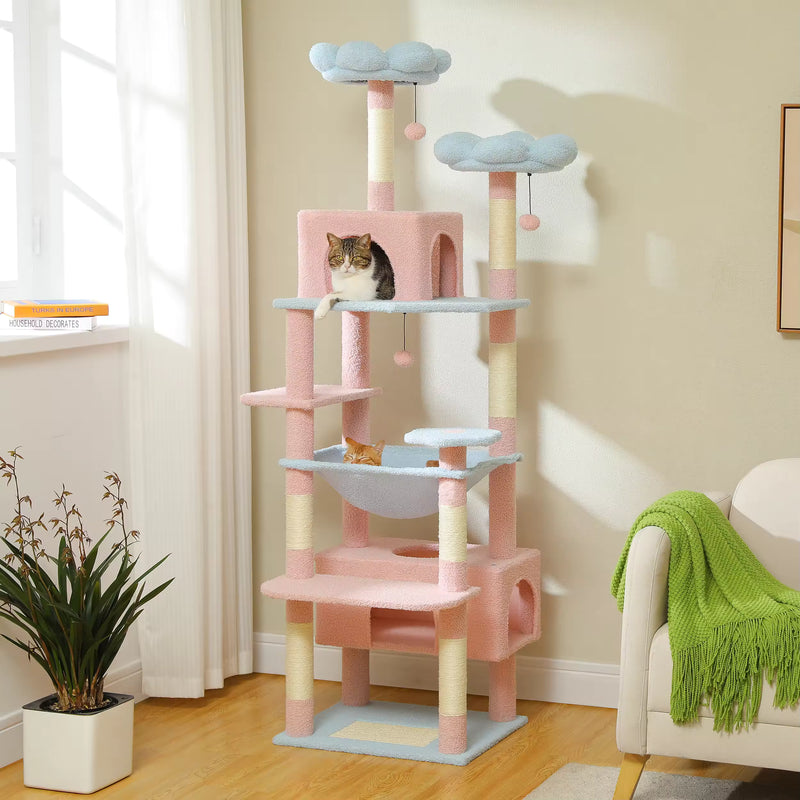
To complement your new "micro-meal" schedule, give your cat a reason to move. Our 184cm Large Cat Tree is a vertical playground. Encouraging your cat to climb to the top for a view (or even placing a few pieces of kibble on different levels) turns mealtime into a hunt.
Keeping Your Kitty Healthy and Trim
Automatic feeders are wonderful tools, but they require a little bit of "human touch" to work effectively. By measuring your portions, cleaning the feeder regularly, and switching to a 4-6 meal "micro-feeding" schedule, you can prevent the health risks associated with obesity and keep your cat purring for years to come.
Ready to upgrade your cat's dining experience? Check out our full Feeding & Watering collection to find the perfect match for your furry friend!