

If you’re the proud parent of a "extra-large" feline: think Maine Coons, Ragdolls, Norwegian Forest Cats, or just a very well-fed tabby: you know the struggle. You bring home a cute cat tower from the local pet store, set it up, and watch in horror as your 18-pound "mini-panther" makes it wobble like a Jenga tower on its last legs.
Standard cat trees are often designed for kittens or petite adult cats. When a large breed jumps with full force, a flimsy tree isn't just annoying; it’s a safety hazard.
At Chew Crew Pet, we’re all about bringing joy to pet owners with accessories that actually work for your furry friends. That’s why we’ve put together this guide. Before you click "buy" on that next tower, here are 10 things you absolutely need to know to ensure your big kitty stays safe, happy, and perched high.
1. Stability is Your Number One Priority
Large cats don’t just "step" onto a tree; they launch themselves like furry rockets. If the base is too light or the footprint is too small, the whole thing will tip.
What to look for: A heavy, wide base. Ideally, you want a base that is at least 24" x 24" for taller towers. A solid lower condo also helps lower the center of gravity, making the tree feel much more grounded.
2. Check the Post Diameter (Think "Chunky")
Most standard cat trees use thin cardboard tubes. For a big cat, you need "industrial strength."
What to look for: Look for scratching posts with a diameter of at least 4 to 5 inches. Thicker posts provide better support for the platforms above and won’t flex or snap under the weight of a heavy climber.

3. Perch Size Matters (No Dangling Limbs!)
There’s nothing sadder than seeing a giant Maine Coon trying to squeeze into a 12-inch perch designed for a kitten. If their limbs are hanging off the side, they won’t feel secure enough to nap.
What to look for: Measure your cat while they’re sleeping. You want a top perch or bed that is at least 18–20 inches long and 14–16 inches deep. Our 184cm Large Cat Tree features padded perches specifically designed to give larger cats the room they need to stretch out.
4. Solid Wood vs. Particle Board
If you want a tree that lasts years rather than months, pay attention to the skeleton. Many budget trees use thin MDF or particle board that can crumble over time.
What to look for: Higher-quality trees use solid wood or heavy-duty plywood. These materials hold screws better and offer the weight needed to prevent wobbling.
5. Weight Capacity is Non-Negotiable
Always check the manufacturer’s weight rating. A "large" cat tree should ideally be rated for at least 20–25 lbs per perch. If you have a multi-cat household where two big cats might end up on the same level, you need even more structural integrity.
6. The "Full Stretch" Scratching Height
Large cats need to fully extend their bodies to get a satisfying scratch and stretch their back muscles. If the scratching posts are broken up by platforms every 10 inches, they can’t get that full-body vertical stretch.
What to look for: Look for at least one uninterrupted vertical post that is 30 inches or taller.

7. Ease of Access (The "Stair-Step" Layout)
As big cats age, or if they are particularly heavy, jumping 24 inches straight up can be hard on their joints.
What to look for: A "staggered" or stair-step design. This allows your cat to climb from level to level with smaller, 8-to-12-inch jumps. It’s safer for their joints and ensures they’ll actually use the top levels as they get older.
8. Material Quality and Maintenance
Big cats mean more fur and potentially more wear-and-tear.
What to look for: High-quality faux fur or household-grade carpet. Some premium trees even feature removable, machine-washable pads. While you're at it, keeping your cat groomed with our grooming tools will help reduce the amount of fur that ends up embedded in the cat tree carpet!
9. Safety First: Wall Anchors
Even the sturdiest tree can tip if a 20-pound cat jumps from a high shelf across the room onto the top of the tower.
What to look for: Most tall, heavy-duty towers come with a wall anchor strap. Don’t skip this step! Bolting the tree to a wall stud gives you ultimate peace of mind.
10. Space for Play and Rest
A good cat tree isn't just a bed; it’s an enrichment center. For large cats, the "hidey holes" or condos need to be big enough for them to actually enter and turn around in.
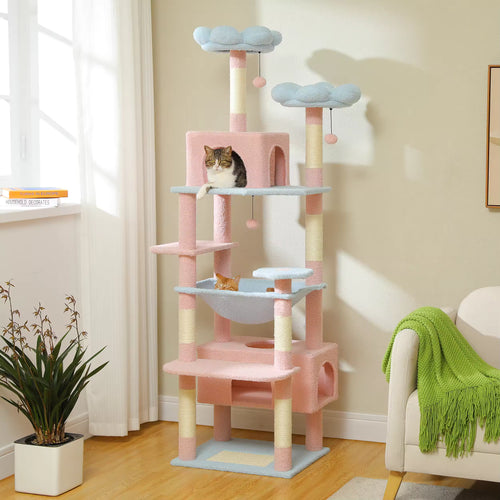
Our Top Recommendation: The 184cm Large Cat Tree for Indoor Cats is a fantastic option for owners of larger breeds. It stands over 6 feet tall, featuring multiple levels, a plush hammock that actually fits a bigger body, and extra-thick sisal posts for scratching.
Making the Most of Your Cat’s New "Castle"
Once you’ve found the perfect sturdy tower, don't forget to make it the center of their world. Place it near a window so they can watch "bird TV," and keep some interactive toys nearby to encourage climbing.
For those high-energy moments between naps, our Rolling Cat Ball is a great way to keep your big kitty moving. And since all that climbing and playing works up an appetite, make sure they have a comfortable place to refuel with our Tilted Raised Cat Bowls, which are easier on their necks (especially for taller breeds!).

Final Thoughts
Investing in a cat tree for a large cat is about more than just aesthetics: it’s about providing a safe, vertical territory where they can feel like the kings and queens they are. By looking for thick posts, wide bases, and oversized perches, you’ll ensure your investment lasts for years and your cat stays off your kitchen counters!
Ready to upgrade your cat’s living situation? Check out our full collection of cat beds and houses at Chew Crew Pet today!